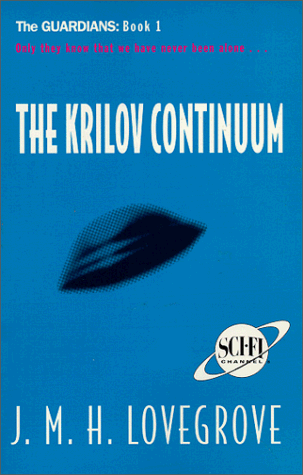
The Guardians (Lovegrove)
No Cover Available
Loading lists...
Summary
A captain’s corridor and a countdown of choices set the tempo as the guardians confront a ripple of interstellar danger. An encrypted plea resurfaces from a past miscalculation, forcing them to weigh fragile alliances against the risk of betrayal. In the din of alarms, the heart of the story is not the mission itself but the people who carry it: the reluctant hero who learns to trust, the skeptic who finally believes, and the one who guards a secret that could shatter everything. As they race toward a fissure in the continuum, each decision echoes through the ships and through the quiet rooms where guilt and hope share the same chair. The cosmos isn’t merely a backdrop here—it becomes a living opposition, testing loyalty, memory, and the stubborn, stubborn will to survive together.
The Guardians (Lovegrove) sits within a lineage of brisk, globe-spanning thrillers that mix hard tech with high-stakes heroism. The series’ arc tightens around decisive choices made under pressure, where loyalties buckle and new alliances form in the press of imminent catastrophe. Its reception has been marked by readers who crave propulsion and morally charged questions rather than neat, tidy endings, with praise for its kinetic plotting and crisp, cinematic prose. Critics note the way Lovegrove threads scientific speculation with human frailty, delivering a recognizably modern space opera that remains grounded in character amid spectacular, perilous setpieces. Across titles, the work balances pulse-pounding action with the quieter gravity of what it means to fight for someone else’s future. It’s a series that rewards attention to detail—the tiny decisions that determine who endures and who falters—and offers a stubborn, hopeful thread threaded through otherwise brutal circumstances.