Thousand Cultures

Loading lists...
Summary
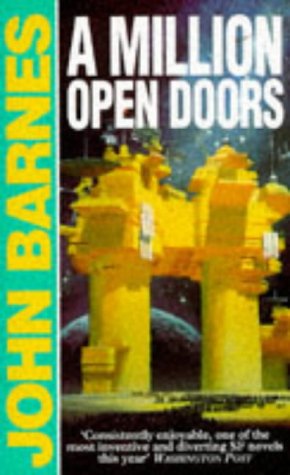
The pulse of the first breath on the landing ramp. A chorus of tongues pours from the crowded quay, each voice a thread in a larger tapestry no one knows how to read. Ari Varin navigates the labyrinthine markets where favors are priced in memory and omens drift like whispered currencies. A debt carried for years resurfaces as a violin string pulled tight, setting off a chain of choices that will test loyalties, betrayals, and the weight of names. In a city that never sleeps, alliances flicker like broken neon, and Ari discovers that survival may require listening to the quiet vow behind every handshake. As ships rise and fall on an industrial sea, the truth behind a forbidden trade begins to emerge, reshaping what everyone thought was already decided.
Barnes’s Thousand Cultures sits at a crossroads in his bibliography, expanding a universe that has always trusted character-driven stakes over grandiose summaries. This series installment deepens the ensemble, balancing intimate loyalties with planetary-scale consequences, and it’s widely noted for its lucid prose and unflinching portrayal of political cabals and personal residue of empire. Critics have praised the way Barnes threads cultural texture into action without sacrificing momentum, while some reviewers have found the plotting denser and more polyphonic than earlier standalones. Overall it’s regarded as a bold follow-up that honors the series’ roots while inviting new readers into a sprawling, morally complex orbit. Among readers, the reception is mixed-to-strong: enthusiasts celebrate the cross-cultural mosaic and the insistence on ordinary people navigating systems who feel as real as the stars they traverse; skeptics push back on the density of worldbuilding and the ambition of the cast. Still, the book’s emotional core—loyalty, memory, and the cost of survival—resonates, ensuring it’s discussed as a high-water mark in contemporary space opera with a distinctly literary cadence.
Main Titles


Additional Titles
Short Fiction

1991
Year
1
Awards
1
Publications
Not Available for Purchase

2006
Year
1
Awards
1
Publications
Not Available for Purchase