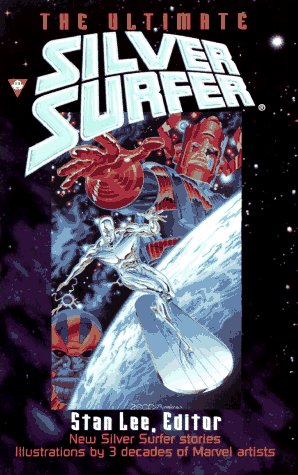
Norrin Radd rides the space-wind on a silver board, a beacon of balance skimming the flux of civilizations. An unthinkable demand presses on him from a cataclysmic horizon: spare a world doomed by its own longing, or ferry it to oblivion to save a distant system. The choice gnaws at him not as a hero’s decree but as a whispering knot in his chest, a test of restraint when every breath of the cosmos urges mercy. He watches a sea of cities, a chorus of people who dream, argue, and fear, and for a moment he understands what it might mean to be truly alone with a universe listening. In the quiet, he learns that power without compassion blinds; power shared becomes a path through the dark, even if that light costs him his own stillness.
This series entry sits within the broader Silver Surfer canon, highlighting cosmic loneliness and moral calculus that Stan Lee explored across multiple titles. The handling here emphasizes the solitary voyager and the weight of cosmic responsibility, with a historically grounded sense of wonder rather than modern reinterpretation. Critical reception to Silver Surfer has often noted its philosophical edge and visual grandeur, appreciating its willingness to contemplate sacrifice and duty beyond typical superhero spectacle.