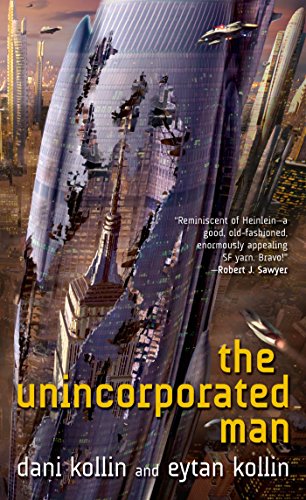
The Unincorporated / Justin Cord

Science Fiction
Cover image for The Unincorporated / Justin Cord series
Science Fiction

Summary

The Unincorporated / Justin Cord follows a man embedded in a society where individuality is measured, bought, and bartered. When a hidden cascade of political incentives collapses around him, Justin must navigate a maze of alliances, public optics, and lethal pragmatism. Each decision dents the city’s carefully maintained order, revealing the fragility of trust and the cost of autonomy as he fights to bend a system that never forgets a debt.

The Unincorporated / Justin Cord sits at a crossroads in Dani Kollin’s broader oeuvre, balancing sharp political SF with character-driven propulsion. The series explores power, identity, and the price of autonomy within a meticulously controlled society, often provoking admiration for its audacious world-building and moral complexity while drawing mixed reactions to its uncompromising gaze on governance and wealth. The books are noted for their intricate plotting and willingness to disturb comfortable certainties, earning a place as a provocative touchstone in contemporary techno-political science fiction.

Main Titles

Justin Cord wakes from cryosleep into a future where every person is owned by a corporate share registry and individual freedom is a relic. Thrust into a society that measures value with stock and...
Justin Cord wakes from cryosleep into a future where every person is owned by a corporate share registry and individual freedom is a relic. Thrust into a society that measures value with stock and sells human futures, he refuses to be parceled into shares. His stubborn independence and anachronistic beliefs collide with the legal and social machinery that defines citizens by contracts rather than souls. Justin’s defiance is personal: he insists on the right to himself and forces a courtroom and a culture to confront what ownership of a life really means. As courts, investors, and ideological enforcers circle, Justin finds unlikely allies who are drawn to the strangeness of a man who insists on being unowned. The novel follows his strategic and moral battles—public debates, legal gambits, and intimate confrontations—that lay bare the cost of freedom in a commodified world. Each victory and wound reshapes both him and the system that cannot quite swallow his stubborn humanity.
The same stubbornness that made Justin Cord a symbol of resistance now ignites conflict across continents and corporations. As new forces marshal to either break or defend the market-born order,...
The same stubbornness that made Justin Cord a symbol of resistance now ignites conflict across continents and corporations. As new forces marshal to either break or defend the market-born order, Justin is dragged deeper into a wider struggle that is equal parts political chess match and battlefield. He remains the center of a storm—targeted by corporate titans who fear contagion of his ideas and rallied around by people who see his defiance as the last human spark in a mechanized world. War here is not only armies and contracts; it is the clash of philosophies made manifest. Justin’s choices force allies into uncomfortable roles and reveal the human cost of systemic change. Through tense negotiations, covert operations, and public spectacle, loyalties fracture and recombine, and the novel examines what one man’s insistence on personhood can do to a world built on ownership.
When the consequences of revolution settle into uneasy peace, the focus widens to include those whose lives were remade by Justin Cord’s rebellion. A woman who once lived in the corporate shadows...
When the consequences of revolution settle into uneasy peace, the focus widens to include those whose lives were remade by Justin Cord’s rebellion. A woman who once lived in the corporate shadows steps forward to claim her own story, testing the limits of the new order. Her struggle is intimate and systemic: she must navigate the lingering structures that commodified identity while trying to build an existence that honors autonomy not only for herself but for others who cannot yet speak. This installment is a study of inheritance and responsibility. As the woman grapples with the personal fallout of past conflicts, she becomes a catalyst for reforms and confrontations that the original rebellion never fully resolved. Relationships become the battleground; empathy, strategy, and sacrifice determine whether the fragile promise of freedom turns into enduring change or a new form of containment.
The long shadow of a man who refused to be owned stretches into a future that must be imagined and constructed. The unincorporated experiment has survived assaults and compromises, yet now faces...
The long shadow of a man who refused to be owned stretches into a future that must be imagined and constructed. The unincorporated experiment has survived assaults and compromises, yet now faces questions that go beyond law and market: what kind of community will replace commodified existence, and which values will survive when expediency beckons? Key figures from earlier struggles—some celebrated, some quiet—find themselves designing institutions and confronting the unintended consequences of liberation. Conflicts are both political and philosophical as leaders, dissenters, and ordinary citizens debate the architecture of freedom. Personal stories weave through institutional transformation: people who once traded their lives for shares must learn to live without being assets, and those who fought for change must reckon with the burdens of constructing a future. The novel closes its arc by testing whether human dignity can be sustained once the fervor of revolution cools and governance begins.

Additional Titles

Short Fiction