Company Wars

Space OperaScience FictionMilitary Sf
Cover image for Company Wars series
Space OperaScience FictionMilitary Sf
Loading lists...

Summary

A motor-fly hums through the corridor as the crew must improvise a risk-laden maneuver to avert a catastrophic loss of life aboard a station that is both home and sentence. Tension tightens in a single breath—someone has miscalculated a supply spike, someone else knows the pattern of an approaching threat, and a captain’s decision will either stabilize the fragile alliance or fracture it beyond repair. In the pressurized hold, a conversation fractures into a pledge and a lie; in the docking bay, a stranger’s quiet request becomes a test of trust. Every moment feels like it could tilt the entire conflict toward survival or ruin, and every choice is weighed against the cost of loyalty in a world where corporate power governs breath as surely as gravity.

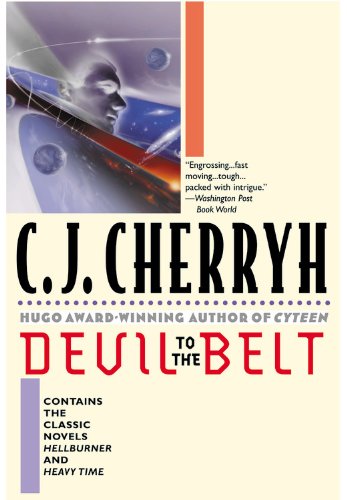
The Company Wars series sits at a pivotal point in Cherryh’s broader universe of spacefaring factions and corporate sovereignties. Within her oeuvre, these novels showcase a hard-edged, serviceable realism about how institutions strain human loyalties and personal loyalties alike when stretched across starships and stripped of familiar anchors. While Heavy Time, Hellburner, and Downbelow Station feature the same pragmatic, survival-driven tone that fans expect, they also push into intensely intimate moments—the quiet exchanges between crew and captain, the choices that define who survives and who remains loyal to whom. Critical reception has often highlighted Cherryh’s talent for translating institutional tension into human consequence, though some readers have found the political complexity intricate to navigate. Overall, the series is regarded as a cornerstone of the author’s career in space opera that melds hard-edged science fiction with character-driven drama. Readers who lean toward mission-focused narratives tend to linger on the way risk is calculated in the moment: the hinge-turn decisions, the alarms that never quite silence, the way a held breath can become a weapon or a ward. The series rewards patience—moments of quiet, of misread signals, of body language traded across a comlog channel or a crowded corridor. It’s not merely what happens, but how people decide who they are under pressure when the ship hums with the insistence of the unknown.

Main Titles

On the vast rim where hulks of industry drift and desperate crews scrape out lives, a handful of young trainees join the ranks of the station hands and corporate-employed specialists. Central among...
On the vast rim where hulks of industry drift and desperate crews scrape out lives, a handful of young trainees join the ranks of the station hands and corporate-employed specialists. Central among them is Jordan McKell, a restless, quick-witted cadet whose idealism collides with the brutal economics of order and profit. Jordan's dreams of a steady career dissolve as he learns the hidden ledger of favors, debts, and violent enforcement that keeps the company lanes running. When catastrophe threatens an outpost, Jordan is thrust into an emergency that forces him to choose between loyalty to comrades and the cold calculations of corporate survival. He discovers allies in unlikely quarters — weathered technicians, ex-crew mercenaries, and a woman with secrets tied to his past — and must navigate sabotage, political games, and the terrifying autonomy of damaged ships. The story stakes are intimate but immense: a small circle of people fighting for their lives while the machinery of commerce grinds on above them. The novel charts Jordan's transformation from naive trainee to someone who must reconcile moral choices with practical necessity. The atmosphere is claustrophobic and kinetic, the dangers both technical and human. Each tense, personal decision pushes him deeper into a world where trust can be fatal and survival demands hard, sometimes ruthless, resolve.
The aftermath of prior clashes leaves ships scorched and reputations smoldering, and the focus narrows to Merrit, an obsessive engineer whose life is consumed by the design of a desperate weapon: a...
The aftermath of prior clashes leaves ships scorched and reputations smoldering, and the focus narrows to Merrit, an obsessive engineer whose life is consumed by the design of a desperate weapon: a ‘hellburner’ that could break blockades and settle scores. Merrit's single-mindedness pulls in a ragged crew whose loyalties are as brittle as the hull plating they patch. He grapples with guilt and memory while racing the clock to test a technology that dances on the edge of catastrophe. At the heart of the tension is a small squad of pilots and artificers whose bonds are forged in fire and secrecy. They must learn to trust one another or die trying. The novel weaves intimate scenes of repair and camaraderie with the looming dread of an experiment that could annihilate more than enemy ships; personal relationships are strained by obsession, and decisions have moral weight that extends beyond tactical victory. Merrit's inner turmoil and the crew's fragile solidarity create a portrait of people pushed to extremes. The narrative explores how innovation is driven by fear and hope in equal measure, and how a single breakthrough can reshape destinies. As alliances shift and the weapon's trial approaches, every character must face whether ends justify perilous means.
Downbelow Station stands as a battered nexus where refugees, traders, and corporate agents collide under the shadow of a galactic conflict. At its center is Signy Mallory, a commander whose duty...
Downbelow Station stands as a battered nexus where refugees, traders, and corporate agents collide under the shadow of a galactic conflict. At its center is Signy Mallory, a commander whose duty binds her to the station even as she struggles with loyalty and personal conscience. She must keep fragile peace among rival interests while the station becomes a crucible for displaced people and wounded ships seeking shelter. As blockade and war ripple through the lanes, Signy forms uneasy pacts with station administrators, captains nursing grudges, and civilian families trying to survive. The narrative tracks intimate encounters — a smuggler's quiet sacrifice, a displaced technician's attempt to carve a life, and a young officer's moral awakening — all set against the larger strain of political maneuvering. The station's corridors and docking rings become stages for decisions that will echo beyond the local chaos. Signy's leadership is tested by betrayals and the moral complexity of wartime choices. The book captures the human face of strategy: leaders balancing compassion with the grim arithmetic of survival. As disparate lives intersect on the station, each character's small acts of courage or cowardice shape the fate of many, making Downbelow Station a tense, human story of endurance amid systemic collapse.
Hugh Aillard, a practical merchanter with a keen eye for bills and bargains, finds himself aboard a weathered trade ship beset by misfortune and shifting allegiances. When cargo disputes, debts,...
Hugh Aillard, a practical merchanter with a keen eye for bills and bargains, finds himself aboard a weathered trade ship beset by misfortune and shifting allegiances. When cargo disputes, debts, and the aftershocks of war threaten the vessel's livelihood, Hugh must balance commercial survival with the moral obligations that bind crew and kin. His decisions reverberate through cramped holds and across transmission channels. The plot tightens as Hugh becomes embroiled in a web of rivalry between mercantile houses and independent captains. Personal relationships — an uneasy partnership with a seasoned captain, a tense mentorship of junior crew, and a softening connection with a woman tied to a rival line — complicate purely financial choices. Each trade run is more than profit; it's a gamble on trust, reputation, and the safety of those aboard. Hugh's quiet pragmatism faces tests that demand heart as much as ledger-keeping. The story illuminates the small, human economies that sustain life on the edges: favors repaid, risks shared, and the stubborn hope that steady hands and honest deals can hold a fractured community together. Luck is fickle, but loyalty may yet be currency enough to save them.
Bet Yeager, a former marine turned courier, drifts to a beleaguered frontier outpost known as the Rim where law is thin and survival depends on skill and nerve. Haunted by past campaigns and...
Bet Yeager, a former marine turned courier, drifts to a beleaguered frontier outpost known as the Rim where law is thin and survival depends on skill and nerve. Haunted by past campaigns and personal loss, Bet takes a low-profile job running messages and supplies, hoping to outrun history. But the Rim proves to be a place where ghosts of war linger, and the arrival of refugees and scavengers awakens old loyalties and old grudges. Bet's stoic exterior cracks as he forms bonds with a motley assembly of locals: a stubborn innkeeper, an idealistic young woman, and a captain whose ship is as battered as Bet's soul. Together they navigate raids, profiteers, and the creeping influence of corporate interests vying for control. Personal debts and moral debts collide when a crisis forces Bet to choose between safe anonymity and the risk of action for those who cannot defend themselves. The tale is a study in quiet heroism, showing how one person's willingness to stand — even reluctantly — can ripple outward and alter a small community's fate. Bet's journey is both inward and outward: a reckoning with guilt, an embrace of fragile companionship, and ultimately, a test of whether honor can survive on the margins.
Tripoint spans three pivotal hubs where commerce, diplomacy, and stingy peace intersect, bringing together a cast of weary veterans and restless newcomers. Jack Dampier, a ship's captain with a...
Tripoint spans three pivotal hubs where commerce, diplomacy, and stingy peace intersect, bringing together a cast of weary veterans and restless newcomers. Jack Dampier, a ship's captain with a reputation for survival, finds his routines upended when a fragile alliance requires him to ferry people and secrets between worlds. His loyalty is stretched thin as shifting political currents make old bargains dangerous and new friendships suspect. Amid negotiations, a tense uproar among crews, and the quiet plotting of corporate agents, personal stories emerge: a displaced family seeking a safe berth, an officer wrestling with conscience, and a young pilot learning the cost of choice. Jack becomes an axis around which decisions revolve; his steady pragmatism hides a man haunted by loss and determined to protect those he can. The stakes are not grandiose battles but the fragile arrangements that keep societies functioning. Tripoint explores how personal courage and small betrayals can tip fragile equilibria. The novel is a mosaic of intimate decisions that together shape broader consequences, showing that in a fractured system, the right act at the right time can mean the difference between survival and ruin.
Nicholas Orsulak, recently returned to his family's merchanter vessel, must reconcile the comforts of kin with the broader upheavals still rocking the lanes. The ship, a living community of...
Nicholas Orsulak, recently returned to his family's merchanter vessel, must reconcile the comforts of kin with the broader upheavals still rocking the lanes. The ship, a living community of relatives and hired hands, faces dwindling fortunes and external pressures that test traditions of trust and mutual obligation. Nicholas navigates family politics, crew loyalties, and the moral responsibilities that come with command in a changing era. When circumstances force the merchanter into contested space, Nicholas must make choices that affect not only his clan but the many lives reliant on their runs. He encounters old comrades from wartime and new faces whose fates are tangled with corporate ambitions and lingering hostilities. Intimate conflicts — a captain's compromised judgment, a crew member's desperate gamble, and Nicholas's own search for identity — drive the action as much as external threats. Finity's End is about homecoming, stewardship, and the fragile economies of affection that sustain long voyages. Nicholas's growth is hard-won: he learns leadership is less about command and more about protecting people whose livelihoods and hopes depend on steady hands and compassionate resolve.

Additional Titles

All-In-One

Short Fiction