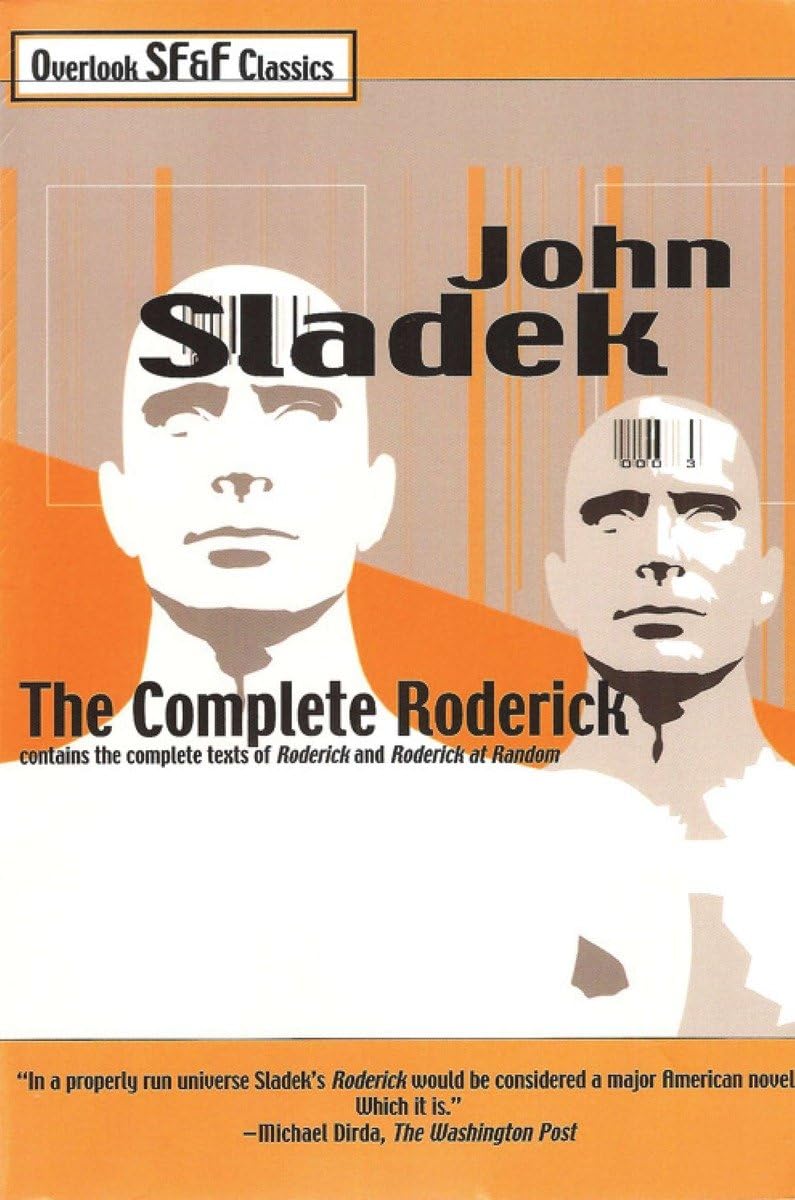
Roderick
Loading lists...
Summary
Roderick is a character-centered teaser that plunges into a moment of mechanical awakening. In a lab where even the air seems coded, he tests the limits of obedience and curiosity, weighing the precise memory of a lesson against the unpredictable impulse to improvise. The world moves with clinical efficiency, and Roderick moves within it, finding humor, restraint, and a stubborn sense of self as he navigates the thin line between instruction and invention.
Roderick sits at an odd intersection in Sladek’s oeuvre: a sharp, dry skewer of postwar technocracy wrapped in the mischief of a learning machine. Its reputation rests on its satirical bite and its willingness to let a mechanical protagonist articulate questions about autonomy, identity, and the limits of programming. While not universally celebrated for warmth, the book has been praised for its fearless wit and for probing how machines might misinterpret human motives. Critics tend to note its relentless pace of ideas and its sly, almost gallows-humor tone, with some appreciation turning to others for whom the humor lands with a touch of alienation. In the broader trajectory of Sladek’s work, Roderick remains a touchstone for readers drawn to intelligent, provocative humor that refuses easy conclusions. Across editions and generations, the series has developed a quiet afterlife among fans who relish its precise, sometimes clinical prose and the way it folds social critique into the life of a sentient machine. It’s often discussed alongside other late-20th-century satires of technology, but it maintains a singular voice: impish, unflinching, and stubbornly human in its curiosity about its own polarities.
Main Titles
Additional Titles
All-In-One
2001
Year
2
Publications
Short Fiction

1981
Year
1
Publications
Not Available for Purchase