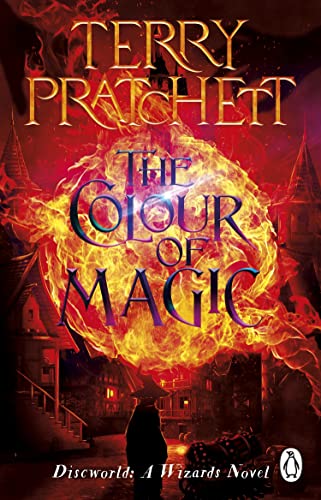
Discworld

Loading lists...
Summary
Something wakes in the street outside a tavern where the rain tastes like tin and the clock on the wall seems to have learned to smile. The man who should be invisible—Rincewind—feels a spark of worry he would rather trade for a polite obituary. An incompetent tourist haunts his steps, two coins clink in a pocket that’s never full, and a dragon’s shadow leans across the window like a question that refuses to be answered. The city knows his name, and the city loves to remind him that names have consequences. Twoflower’s questions are innocent, but they have a way of turning corners that leave you with fewer chances than you started with. They wander through streets where wizards practice patience the way a barber practices hair, where a luggage with a mind of its own follows a path paved by mischief and compulsion, where every doorway is a hinge for a door you never saw closing. In this world, magic is as likely to be a blunder as a blessing, and courage is simply the smallest step you take after you realize you’re being chased by your own cowardice—yet you run anyway, because the road is long and laughter is the true compass, even when it leads you to trouble you never expected.
Discworld sits among Terry Pratchett’s sprawling body of work as a launchpad for a universe that skewers genre conventions with warmth and wit. The Colour of Magic, as the inaugural entry, sets the template: a sunlit crusade against arrogance, a geographies-spanning chase that never forgets the jokes. Critics often note its accessibility, its fearless humor, and its sly affection for the very quirks it pokes fun at. Readers widely regard the series as inventive, generous, and endlessly quotable, even as it earned a reputation for brisk pacing and sharp social observation. The books have influenced a generation of comic fantasy and remain a touchstone for fans who want clever satire without grimdark cynicism.
Main Titles


4
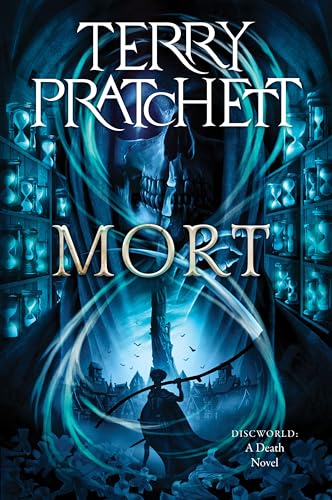
Mort
5
Sourcery


7
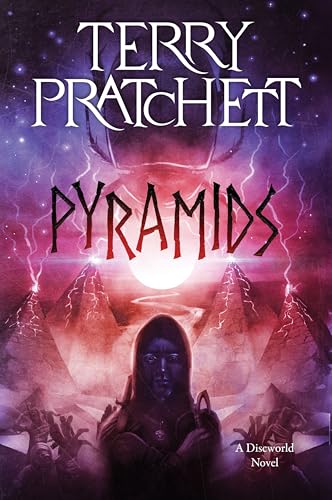
Pyramids
9
Eric

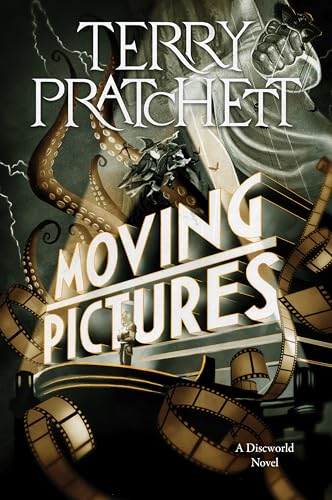
11
Reaper Man


13
Small Gods
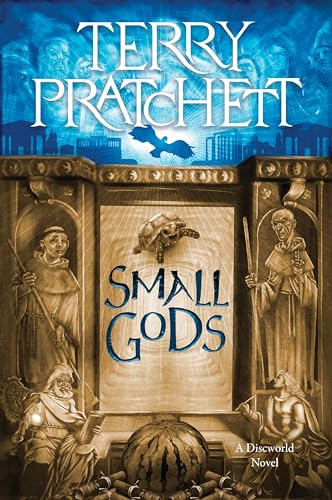

15
Men at Arms

16
Soul Music
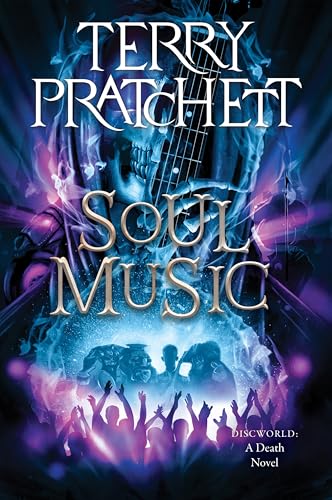
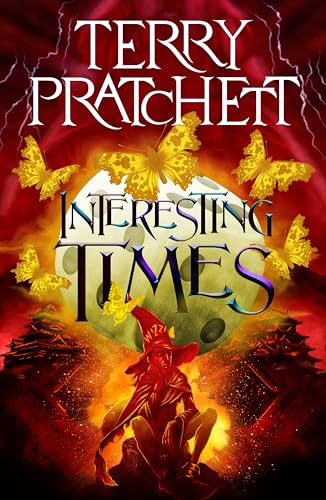
18
Maskerade
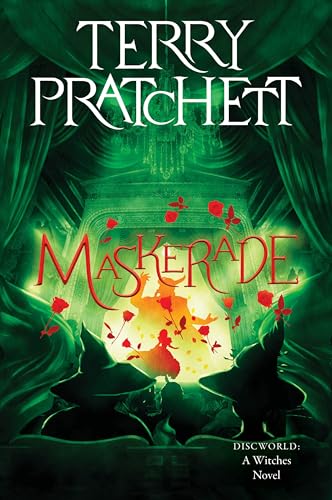
19
Feet of Clay

20
Hogfather
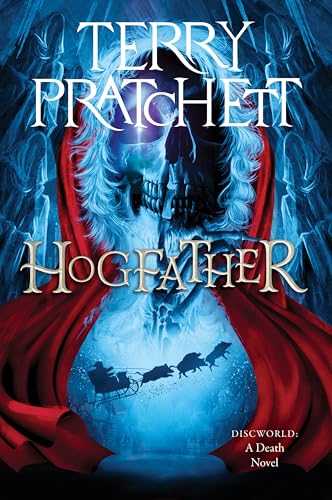
21
Jingo

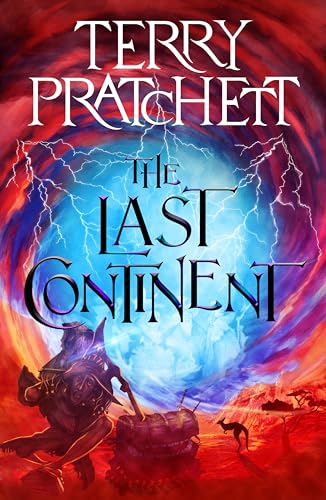
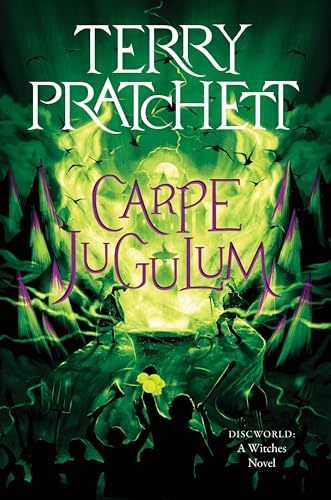

25
The Truth
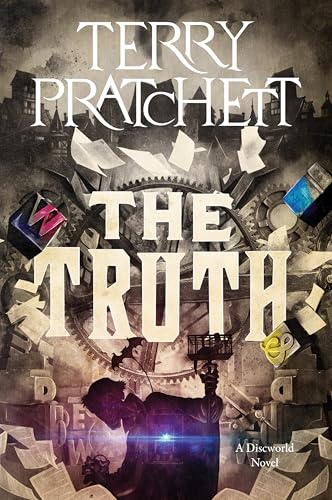

29
Night Watch


33
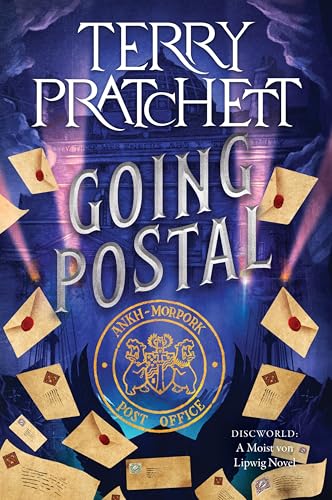
Going Postal
34
Thud!

35
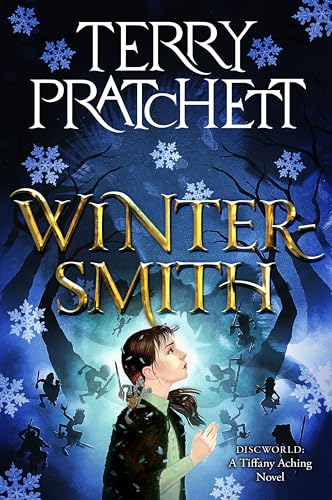
Wintersmith
36
Making Money


39
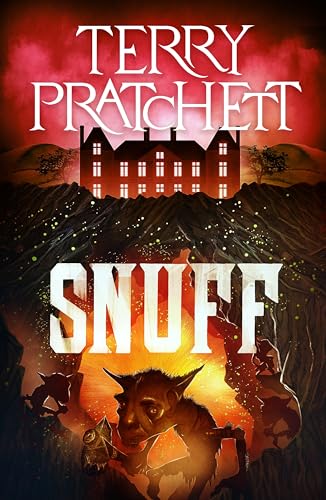
Snuff
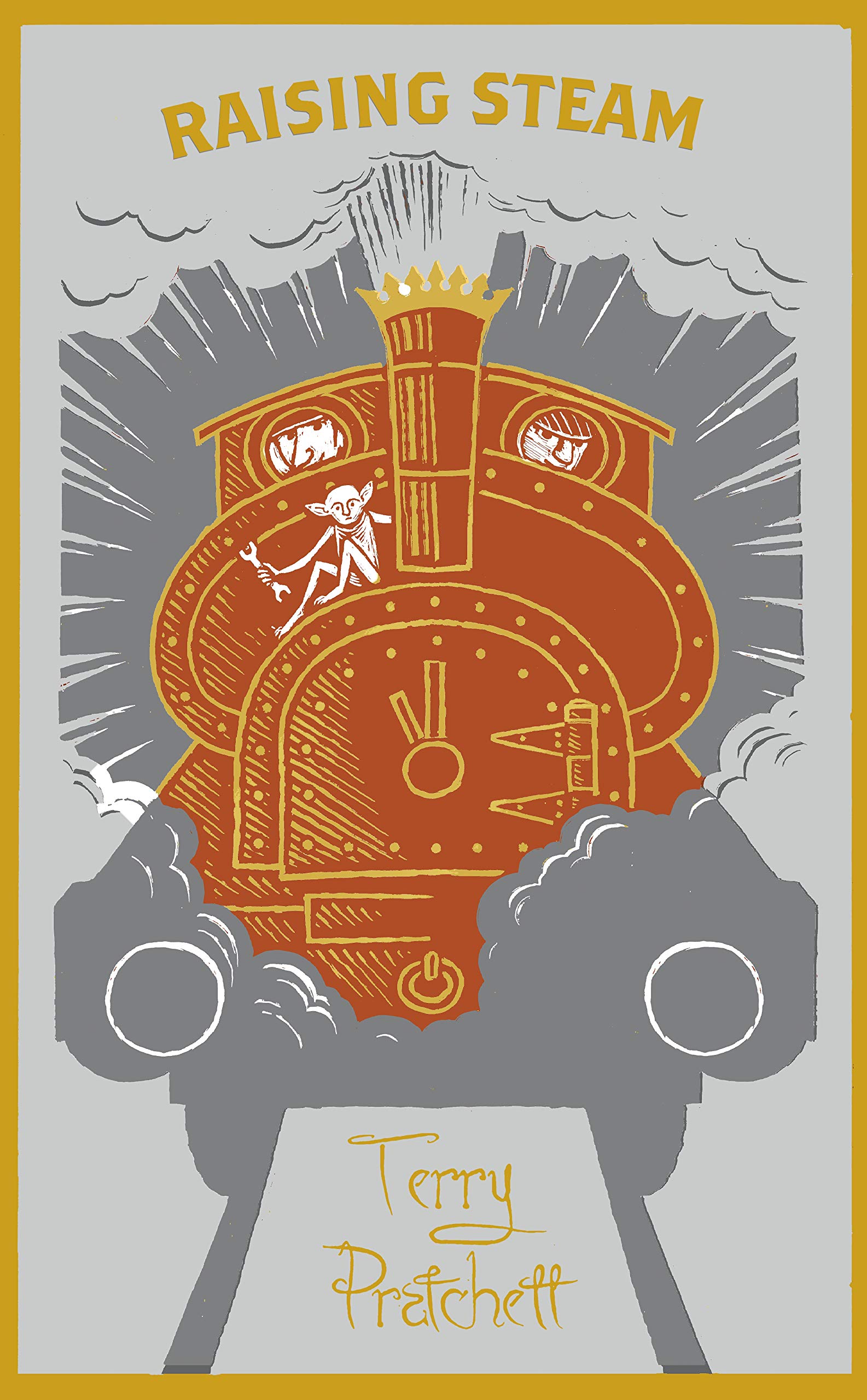

Additional Titles
Novel

1994
Year
2
Publications
Collection
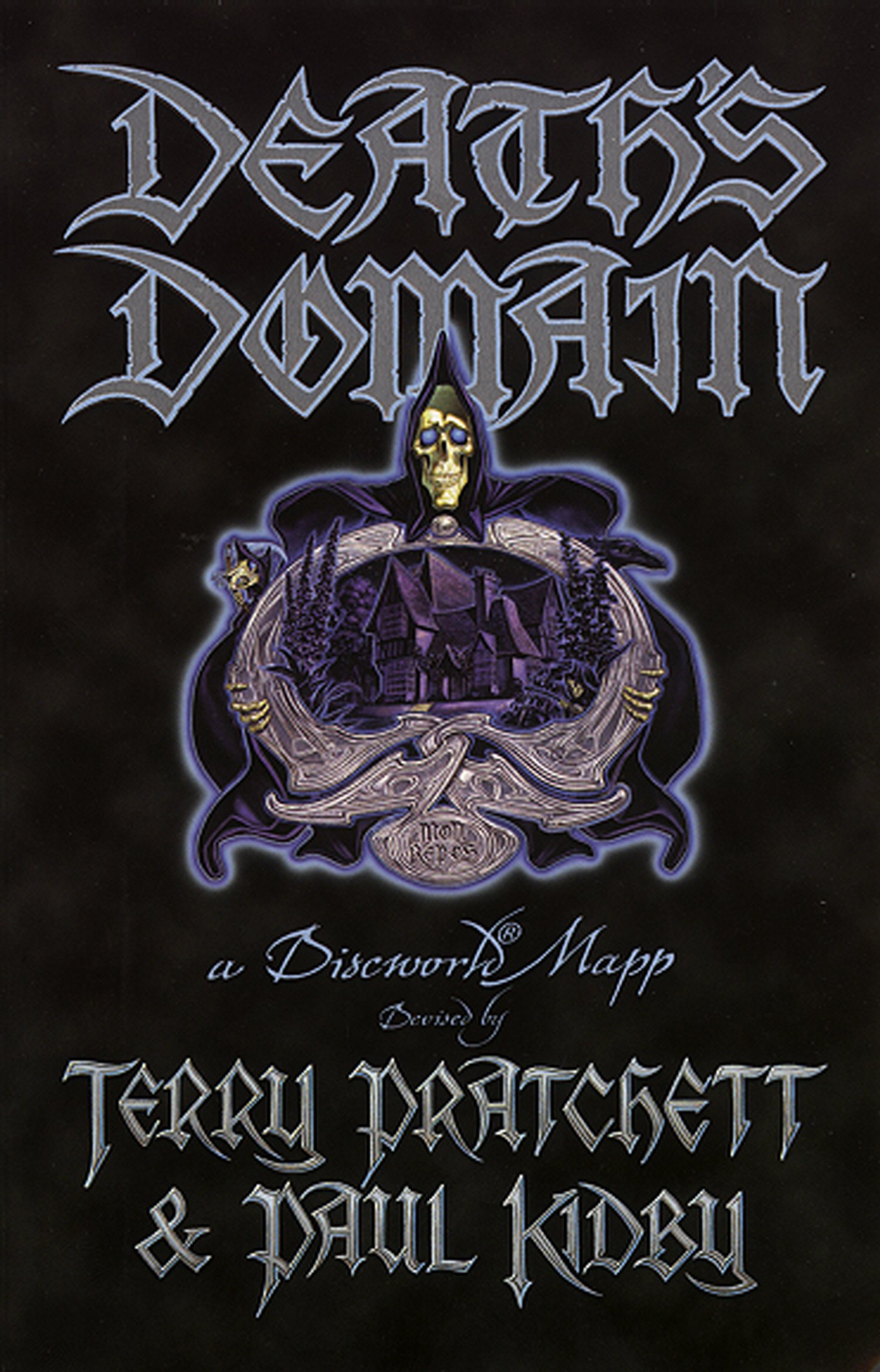
1999
Year
4
Publications
2007
Year
4
Publications
Short Fiction
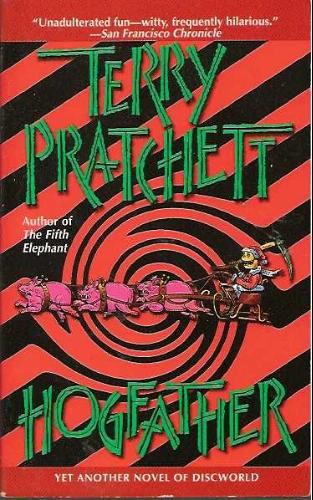
1
Publications

3
Publications
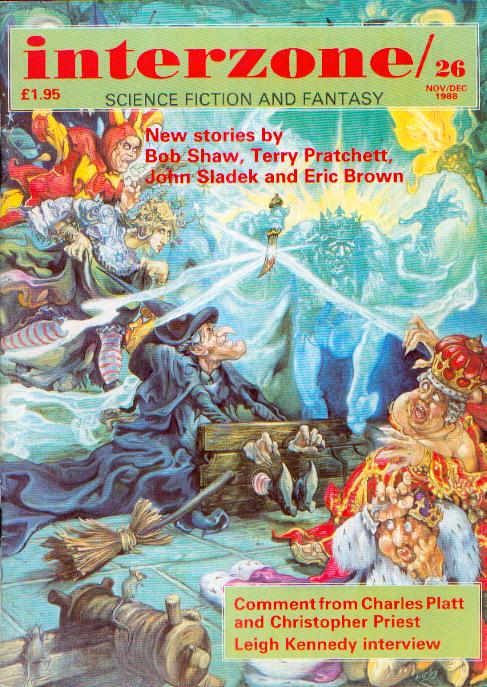
1988
Year
1
Publications
Not Available for Purchase

1988
Year
1
Publications

1989
Year
1
Publications

1991
Year
1
Publications
Not Available for Purchase

1992
Year
33
Publications
1993
Year
15
Publications
1998
Year
25
Publications
1999
Year
10
Publications

2001
Year
1
Publications
2001
Year
5
Publications

2002
Year
1
Publications

2003
Year
4
Publications

2004
Year
1
Publications
2004
Year
12
Publications
2004
Year
10
Publications
2005
Year
10
Publications

2005
Year
1
Publications
2007
Year
9
Publications
2009
Year
9
Publications
2012
Year
9
Publications
2012
Year
9
Publications

2013
Year
1
Publications
Nonfiction

1989
Year
1
Publications

1993
Year
1
Publications

2008
Year
2
Publications

2016
Year
1
Publications

2017
Year
2
Awards
3
Publications